
Everyone talks about AI in ecommerce. We actually deploy it.
Product description automation, customer service agents, predictive analytics — we deploy AI where it delivers measurable results.
No stack overhaul. No buzzwords. Real implementations with real outcomes.


What is AI in ecommerce?
It's not about chatbots. It's about operations.
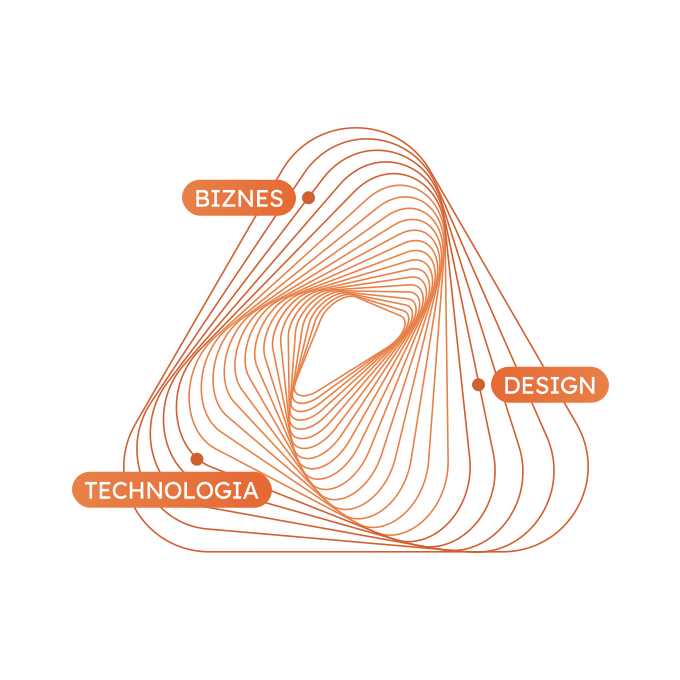
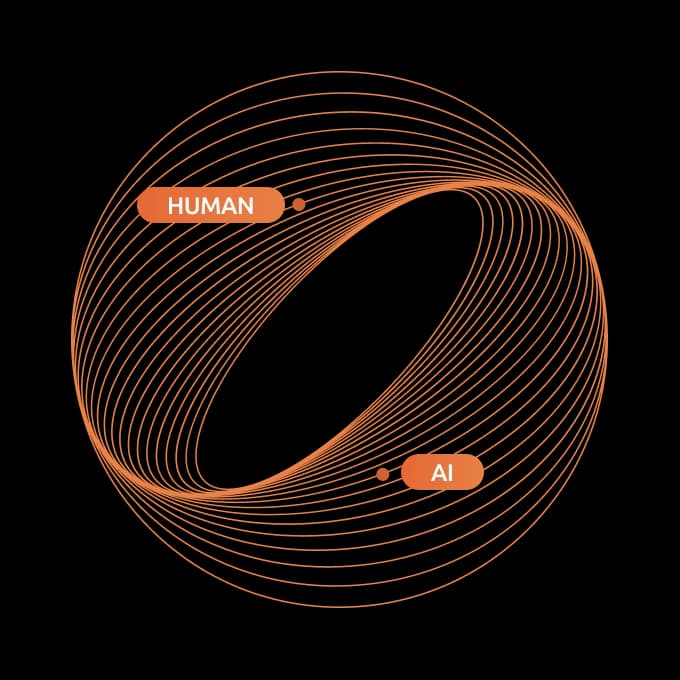
For AI to perform well, one rule must hold — the balance of three pillars: technology, design and business. Technology needs to be stable and scalable. Design needs to guide the user, not get in the way. Business goals need to set the direction — not the other way around. AI amplifies each of these pillars, but it won't find the right balance between them on its own — that takes human judgement.
We've been deploying AI in online stores since 2024. Over a dozen projects, from simple agents to full automation pipelines. We work on your existing stack — no platform swap, no migration.
What does AI change in your store?
Product descriptions
AI agent generates descriptions matched to category, sales channel and target audience. Your editor reviews and publishes. Instead of 2 weeks for 500 descriptions — 2 days including review.
Customer service 24/7
AI agent handles repetitive tickets — order statuses, returns, FAQs. Escalates complex cases to your team. Your support staff focuses on what actually requires human judgement.
Personalised recommendations
Product recommendations based on actual user behaviour, not manually configured rules. Dynamic, updated in real time, with zero team involvement.
Translations and expansion
Enter a new market without building a translation team. AI handles localisation of product content, category descriptions and marketing materials — with industry context preserved.
Predictive analytics
Forecast stock levels, demand trends and seasonality before the problem occurs. Fewer stockouts, less overstock, better purchasing decisions.
Content marketing
Blog posts, newsletters, social media content — AI-generated, SEO-optimised and consistent with your brand voice. Your content team scales without new hires.
Image generation
Product photos on varied backgrounds, promotional banners, social media creatives — AI-generated without a photoshoot. From concept to finished graphic in minutes.
Campaign optimisation
Agent analyses campaign data — costs, conversions and ROAS at ad group and creative level. It identifies where budget is wasted and where scaling makes sense. Your ads specialist gets ready-made recommendations — decisions stay with your team.
Featured Projects

MUVE Steam

Escooterclinic Agentic Commerce
Why ecom.house?
ecommerce practitioners who deploy AI
We know store processes inside out — fulfilment, PIM, checkout, marketing automation. We know where AI delivers measurable returns and where it's a waste of money and time. We don't deploy AI for the sake of it.
Over a dozen completed AI projects in ecommerce. A team combining development expertise with practical knowledge of store operations. Tools: Anthropic, OpenAI, Gemini, n8n, ComfyUI — we match technology to the problem, not the other way around.
What else?
AI-driven development
Ecommerce AI isn't just about agents automating store operations. It's also a completely new approach to development — AI writes code, tests it in a preview environment and proposes changes. None of them reach production without team sign-off. We control every step of the process — not pretending AI doesn't work, but knowing exactly where a human needs to step in.
And on top of that, picture this: you have an idea at 9am. You drop in a screenshot and a short description. By noon you have a preview with the finished change. You click 'approve' — and it's live. No sprints. No tickets. Same day. That's devAI server — an optional service that puts you directly inside our process.
Describe your idea
You describe what you want to change or add. Drop a screenshot, a rough sketch, an example. The more context, the better the result.
AI agent executes
The AI agent on the devAI server writes code, runs automated tests and presents a ready proposal for review.
Review and approve
You test on a preview URL, check the result. Approve, adjust or send feedback — the agent iterates.
Pipeline deploys
Once approved, our pipeline automatically deploys the change to production. Our team works in the background — monitoring, responding and verifying.
COMPARISON
From idea to production the same day
| Metric | Traditional development | With devAI |
|---|---|---|
| Time from idea to production | Days — weeks | Same day |
| Who writes the code | Developer from scratch or with AI | AI agent + team review |
| Cost of small changes | Full developer rate | A fraction — AI executes, human verifies |
| Testing | Manual tests + preview on stage | Automated tests + preview URL |
| When AI isn't enough | n/a | Developer takes over |
| Production deployment | CI/CD pipeline + critical path tests | CI/CD pipeline + critical path tests |
| Change oversight | ecom.house team per SLA | ecom.house team per SLA |
| Rollback after issue | Immediate | Immediate |
| Knowing what's in production | Full audit log | Full audit log |
AI is a hammer. A great one — but still just a hammer.

You can't build a house with a hammer alone.
An online store isn't a single task. It's architecture — hosting, CI/CD, monitoring, security, integrations with ERP, PIM, payment gateways, logistics. It's data flows between systems that need to work at 3am on Black Friday. AI doesn't design that — at least not on its own. You need people who've built dozens of stores.
We're pragmatic. AI is the best tool in our stack in years. But someone still needs to keep their hands on the wheel and set the course. That's what we deliver: the architecture, the infrastructure and the experience to know where AI saves you money — and where letting go costs you more.
More about AI in ecommerce
Questions about AI in ecommerce
Will artificial intelligence replace my ecommerce team?
How much does AI implementation cost for an online store?
Which ecommerce processes can AI automate?
How does AI automate product description creation?
What is devAI and how does it speed up store development?
Can I test AI in my store before a full rollout?
Write and let's go
See the results
Explore selected projects and read case studies in a concise format.

LaMania

Bioderma / Esthederm

Bielenda / MiyaCosmetics

Bayer / Agrocloud

Cumulus

MUVE

DESA Home

Pitstopparts